
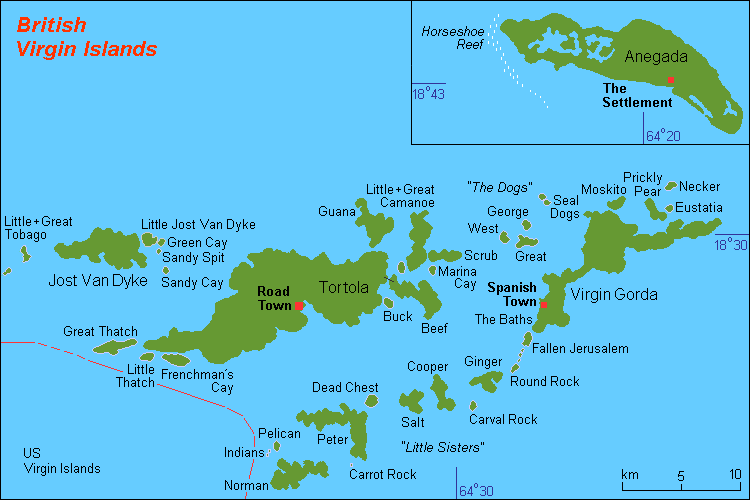
British Virgin Islands
The British Virgin Islands offer a premier offshore financial center with zero direct taxes, strict privacy laws, and a secluded luxury lifestyle for the global elite.

With over 400,000 international business companies registered, the British Virgin Islands stand as a cornerstone of global offshore finance. The jurisdiction imposes no corporate or capital gains tax, generating revenue primarily through registration and annual fees. Tortola's Terrance B. Lettsome International Airport connects to major Caribbean hubs, while the legal framework—rooted in English common law with specialized commercial courts—ensures efficient dispute resolution. Operating in Atlantic Standard Time (UTC-4), the BVI overlaps with US Eastern Time during daylight saving, facilitating business with North America.
Life in the BVI revolves around secluded luxury: private villas with infinity pools, private docks, and year-round trade winds that make outdoor living effortless. The zero personal income tax and strict financial secrecy laws cultivate an aura of untouchable financial freedom. Exclusive social circles gather at private members' clubs like the Bitter End Yacht Club, where superyachts and regattas signal status. Gated communities and private security provide a safe, insulated environment, far from public scrutiny.


Tax advantages
- No corporate or capital gains tax on IBCs or individuals.
- Zero personal income tax, capital gains tax, or wealth tax.
- No inheritance or estate taxes, facilitating generational wealth transfer.
- Strict financial secrecy laws protect asset privacy.
- No withholding tax on dividends, interest, or royalties paid to non-residents.
Tax disadvantages
- Annual registration and license fees for IBCs and trusts can be substantial.
- No double tax treaties with major economies, limiting tax planning opportunities.
- Economic substance requirements may apply to certain entities, increasing compliance costs.
Residency advantages
- No minimum stay requirement for economic residency; physical presence not mandatory.
- Fast-track residency for high-net-worth individuals investing in real estate or business.
- Path to permanent residency after five years of residence.
- Access to a stable, English-speaking jurisdiction with a common law legal system.
- Visa-free travel to over 100 countries with a BVI passport (after naturalization).
Residency disadvantages
- No direct citizenship-by-investment program; naturalization requires five years of residency.
- Limited healthcare and education infrastructure; serious cases require evacuation abroad.
- High cost of living, especially for imported goods and real estate.
- Small population and limited cultural diversity may feel isolating for some.
Living quality
Living in the BVI offers a high quality of life for those who prize seclusion and natural beauty. The tropical climate with constant trade winds allows year-round outdoor activities, from sailing to hiking. Infrastructure is adequate but limited; top-tier medical care and international schools are scarce, often requiring travel to Puerto Rico or the US. Security is excellent in gated communities, though petty crime exists in less affluent areas. The pace is relaxed, with a strong sense of community among the expatriate elite.
Best for
- The BVI is ideal for ultra-high-net-worth individuals seeking a tax-neutral jurisdiction to hold assets and structure investments. It suits those who value privacy, exclusivity, and a yachting lifestyle, and who do not require extensive local infrastructure. Entrepreneurs and investors establishing IBCs or trusts will find the legal framework and zero-tax environment particularly attractive.
Atlas cities in British Virgin Islands · 1 listed, 3 offices
- Road Town Wealth 80
British Virgin Islands sits in the Atlas region Offshore & Special Jurisdictions.
See the region →